Augmented Reality (AR)
- Home
- Industries

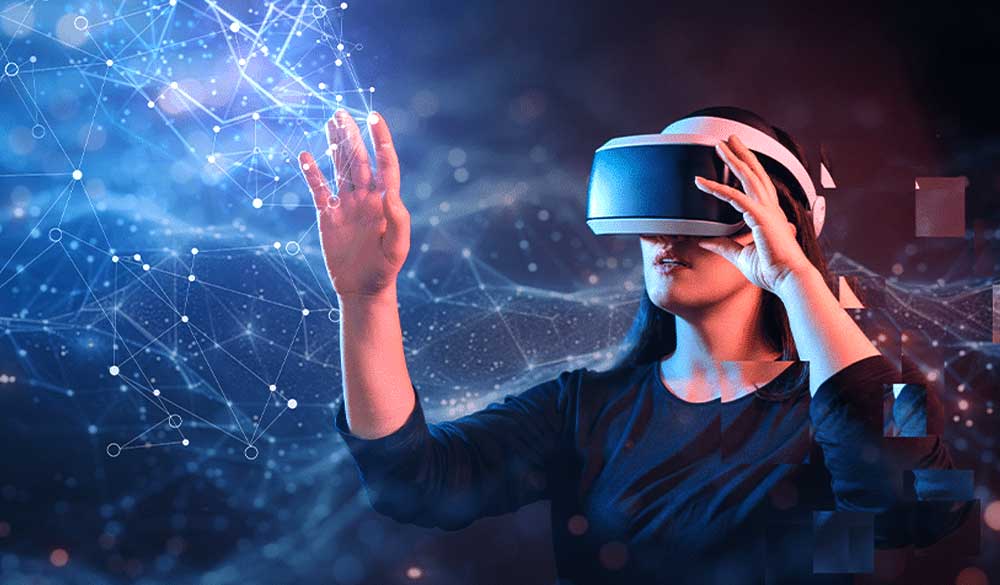
Augmented Reality technology is creating new possibilities for interactive digital experiences, and Augmented Reality (AR) in Bangladesh is becoming increasingly relevant across education, engineering, healthcare, manufacturing, retail, tourism, agriculture, and professional training. AR combines digital content with the physical environment so users can view information, models, instructions, or visual effects within their real surroundings. Unlike traditional digital applications that keep information inside a screen, AR can place useful digital elements directly into the user's field of view. Smartphones, tablets, smart glasses, cameras, sensors, and specialized AR devices can support different types of applications. A well designed AR solution can improve visualization, communication, learning, maintenance, and operational efficiency. Businesses can use AR to demonstrate products, guide technicians, support customers, or create engaging marketing experiences. Educational institutions can use interactive models to explain complex subjects and provide practical learning experiences. Engineers can visualize equipment, structures, components, and technical information before physical implementation. AR systems can also connect with databases, enterprise software, geographic information, and real time sensor data. Successful implementation requires appropriate hardware, accurate digital content, reliable software, user friendly interfaces, and suitable technical support. With careful planning, Augmented Reality can become a practical tool for improving productivity, learning, visualization, and customer engagement in Bangladesh.
Augmented Reality works by combining digital information with a user's view of the physical environment. A camera or sensor captures information about the surroundings, while software processes the environment and determines where digital content should appear. The system can then display three dimensional models, text, images, animations, directions, or other information in relation to real world objects. Depending on the application, AR can use image recognition, object tracking, location information, depth sensing, motion tracking, or other technologies. Mobile devices can provide a convenient platform for many AR applications because they already include cameras, displays, processors, and motion sensors. More advanced applications can use specialized smart glasses or head mounted devices for hands free interaction. AR software must maintain accurate alignment between digital content and the physical environment. Poor tracking can cause virtual objects to move incorrectly or appear disconnected from their intended location. Lighting, surface quality, camera performance, device capability, and environmental movement can also influence the user experience. Professional AR development therefore requires careful testing under real operating conditions. The most effective systems focus on useful information and intuitive interaction rather than visual effects alone. When hardware, software, tracking, and digital content work together correctly, AR can provide an engaging and practical way to access information.
Education is one of the important areas where Augmented Reality can improve the connection between theoretical knowledge and practical understanding. Students can interact with digital models of machines, human anatomy, scientific structures, geographic features, engineering components, and other subjects through AR enabled devices. Instead of studying only from static images, learners can explore interactive content from different angles and observe how components relate to one another. AR can also support vocational and technical training by providing visual instructions for equipment operation, maintenance, assembly, and inspection. Teachers can use AR applications to demonstrate concepts that are difficult to explain through conventional classroom methods. Training organizations can develop guided exercises that show learners where to look, what component to select, or which procedure to follow. Important educational benefits can include:
AR should complement teaching rather than replace instructors or practical experience. The digital content must be accurate, educationally relevant, and easy to understand. When integrated with a structured curriculum, AR can make learning more visual, interactive, and memorable.
Engineering teams can use Augmented Reality to visualize technical information directly within physical environments. Engineers can view digital models of machinery, pipelines, electrical systems, buildings, and other assets while standing at the actual site. This can make it easier to compare planned designs with physical installations and identify potential issues. Maintenance teams can use AR to access equipment information, diagrams, instructions, and inspection procedures while working on machinery. This reduces the need to repeatedly consult separate manuals or move between the work area and a computer. AR can also support assembly and installation by displaying the correct sequence of operations. In manufacturing environments, digital overlays can identify components, tools, inspection points, or process instructions. Engineers can collaborate remotely by sharing visual information and guiding another person through a task. Industrial AR applications should be designed with careful attention to safety and usability. Digital information must remain clear without obstructing important physical objects or warning indicators. Devices should also be suitable for the working environment, including factors such as dust, temperature, lighting, movement, and protective equipment. With accurate digital models and reliable tracking, AR can improve technical communication and support more efficient engineering workflows.
Maintenance activities often require technicians to understand equipment condition, component location, service procedures, and technical documentation. Augmented Reality can bring relevant information into the technician's physical workspace. An AR application can recognize selected equipment and display digital instructions, component names, diagrams, inspection information, or maintenance steps. This can reduce the time required to search through technical documents. AR can also support remote assistance by allowing an experienced engineer to view a technician's environment and provide visual guidance. This is useful when specialized expertise is not immediately available at the site. A maintenance AR platform can provide features such as:
The quality of the digital information is critical. Incorrect maintenance instructions could create operational or safety problems, so content should be reviewed and controlled by qualified technical personnel. AR hardware must also be comfortable for extended use and suitable for the working environment. When properly implemented, AR can support technicians with timely information and improve consistency during maintenance tasks.
Healthcare can benefit from AR through visualization, training, patient education, and selected clinical support applications. Medical students can use interactive anatomical models to study organs, structures, and relationships in a more immersive way. Training institutions can use AR to demonstrate procedures and medical equipment without requiring constant access to physical resources. Healthcare professionals may also use AR to visualize relevant information during selected tasks, depending on the clinical application and regulatory requirements. Patient education can benefit from interactive visual explanations that make medical concepts easier to understand. For example, an AR application could display a visual representation of an anatomical structure while explaining its function. Healthcare AR systems require particularly careful design because accuracy, privacy, usability, and safety are critical. Medical information must be validated by qualified professionals, and sensitive patient information should be protected through appropriate security controls. Devices must also be hygienic and suitable for clinical environments where applicable. AR should not be treated as a replacement for professional medical judgment. Its strongest role is to provide additional visualization and information that supports education, communication, and carefully validated workflows. With responsible development, AR can contribute to more engaging medical education and improved communication between healthcare professionals and patients.
Retail businesses can use Augmented Reality to create more interactive customer experiences. Customers can use mobile devices to visualize products before making purchasing decisions. Furniture retailers, for example, can allow users to see how a digital representation of an item may look within a room. Fashion businesses can explore virtual product visualization and interactive promotional experiences. AR can also provide additional product information when users scan packaging, displays, or promotional materials. This creates a connection between physical retail environments and digital content. Businesses can use AR to present product demonstrations, interactive catalogs, brand stories, and educational information. Effective retail AR should be simple to use and should provide clear value to customers. Applications that require complicated installation or confusing navigation may reduce user engagement. Performance should also be optimized for commonly available mobile devices where broad customer access is important. Digital models should accurately represent the actual products so that users receive realistic information. AR analytics can help businesses understand how customers interact with digital content while respecting privacy requirements. By combining physical products with interactive digital experiences, AR can help retailers create stronger customer engagement and provide more informative shopping experiences.
Construction and architecture can use AR to connect digital building information with physical sites. Architects and engineers can visualize building models within the actual construction environment and compare planned structures with existing conditions. This can help teams understand spatial relationships before or during construction. AR can display information about walls, structural elements, mechanical systems, electrical components, and other building services. Construction teams can use visual guidance to support installation and inspection activities. Project managers can also use AR during site meetings to communicate design information more clearly. A digital model can make complex technical information easier to understand for people who may not work directly with engineering drawings. AR can also support coordination between different project disciplines. However, the accuracy of the digital model and the positioning system is essential. If the virtual model is incorrectly aligned with the physical site, it may create confusion rather than improve decision making. AR should therefore be used alongside established engineering drawings, measurements, inspection procedures, and professional judgment. With accurate models and reliable tracking, AR can improve visualization and communication throughout selected stages of construction and architectural projects.
Agriculture can benefit from AR through field visualization, equipment guidance, crop information, training, and farm management. Farmers or agricultural technicians can use mobile devices to access information while inspecting crops or equipment. AR can display selected information about field conditions, irrigation components, machinery, or crop management procedures. Training applications can guide users through equipment operation and maintenance. Agricultural students can also use AR to study plant structures, soil systems, farm machinery, and production processes. When combined with geographic information systems and sensor data, AR could present location based information directly in a field environment. For example, digital maps or sensor readings could be visualized in relation to physical field locations. Practical agricultural AR systems should consider outdoor lighting, dust, moisture, network connectivity, and device durability. Battery performance is also important for field use. Digital information must be based on reliable agricultural data and should be reviewed by appropriate specialists. AR is most useful when it simplifies a task or makes important information easier to understand. It can therefore complement smart farming technologies by providing a more visual interface between digital agricultural data and the physical farm environment.
Tourism and cultural heritage projects can use AR to create interactive experiences around historical sites, museums, monuments, and cultural locations. Visitors can point a mobile device toward a landmark and receive digital information related to its history, architecture, or cultural significance. AR can also reconstruct selected historical scenes or display virtual representations of structures that no longer exist. Museums can use AR to provide interactive explanations alongside physical exhibits. This can make educational content more engaging for visitors and younger audiences. Tourism applications can provide location based information, digital navigation, multilingual content, and interactive storytelling. Heritage applications require careful research because digital representations should respect historical accuracy and cultural context. The technology should enhance the physical experience rather than distract from the actual site. Outdoor applications should work under changing lighting and connectivity conditions. User interfaces should remain simple so that visitors can access information without extensive technical knowledge. AR can create a bridge between physical heritage and digital storytelling. For Bangladesh, this approach can support innovative tourism experiences while helping visitors understand historical, architectural, and cultural information in a more engaging way.
Businesses can use Augmented Reality as part of digital marketing campaigns, product demonstrations, brand experiences, and customer engagement strategies. AR can transform printed materials, packaging, advertisements, and physical displays into interactive digital experiences. A user may scan a visual marker and receive a three dimensional model, product demonstration, video, animation, or other digital content. This creates an opportunity for businesses to connect traditional marketing channels with digital platforms. AR campaigns can also support product education by allowing customers to explore features before contacting a sales team. Businesses should focus on usefulness and relevance rather than using AR only as a novelty. Digital content should load efficiently, function reliably, and provide a clear user benefit. Marketing teams should also evaluate accessibility across different devices and operating environments. AR analytics can provide information about user interactions, but businesses must handle personal information responsibly. A successful AR marketing solution requires collaboration between designers, developers, content specialists, and business teams. When properly planned, AR can create memorable customer experiences and provide an innovative way for organizations in Bangladesh to present products and services.
Remote assistance is another practical application of Augmented Reality for organizations with distributed technical teams. An experienced specialist can provide guidance to a field technician through an AR enabled device. The technician can share a view of the equipment or work area while the remote expert provides visual instructions. Digital annotations can highlight components, connection points, tools, or areas requiring attention. This can reduce the need for an expert to travel to every site and can improve access to specialized knowledge. Remote assistance can be useful for industrial maintenance, engineering inspection, equipment installation, telecommunications, energy systems, and technical support. A reliable communication connection is important because real time guidance depends on stable data transmission. Devices should also provide sufficient camera quality and clear audio and visual interaction. Organizations should establish appropriate access controls because remote support sessions may involve sensitive technical information. AR should be integrated with existing maintenance documentation and enterprise systems where practical. This can create a more connected support process in which technicians receive both expert guidance and structured technical information. Remote AR assistance can therefore improve collaboration while reducing some geographical barriers to technical expertise.
Although Augmented Reality offers significant opportunities, successful implementation requires careful consideration of technical, financial, operational, and user related factors. Hardware availability, device compatibility, network performance, digital content development, user training, and technical support can influence project success. Outdoor AR applications may face challenges from strong sunlight, rain, dust, and changing environmental conditions. Indoor systems may require accurate tracking in spaces with limited visual features. Organizations also need skilled developers, designers, engineers, and subject matter experts to create reliable AR solutions. Important implementation considerations include:
Organizations should begin with clear objectives and measurable outcomes. A small pilot project can help identify technical and usability challenges before broader deployment. AR should solve a real business, educational, or operational problem rather than being adopted only because the technology is innovative. Proper planning can improve usability, reliability, and long term value.
The future of Augmented Reality in Bangladesh will increasingly connect AR with artificial intelligence, digital twins, Internet of Things devices, cloud computing, geographic information systems, and advanced three dimensional visualization. AI can help AR applications recognize objects, interpret environments, provide contextual information, and support interactive assistance. IoT integration can allow live sensor information to appear within an AR environment. Digital twins can connect virtual representations of equipment or facilities with real operational data. This can create powerful applications for industrial maintenance, engineering, smart cities, agriculture, education, and infrastructure management. AR glasses are also expected to become more capable and practical as hardware technology develops. However, future adoption will depend on more than hardware improvements. Organizations will need reliable digital content, skilled technical teams, secure systems, appropriate training, and clear business objectives. Local developers and educational institutions can play an important role by creating solutions that address Bangladesh specific requirements and operating conditions. Businesses can also explore AR as part of broader digital transformation strategies. With responsible implementation, AR can become a practical interface between people, physical environments, and digital information. Its long term value will come from improving how people learn, work, communicate, maintain equipment, and make decisions.
Augmented Reality provides a flexible technology for connecting digital information with physical environments. Augmented Reality (AR) in Bangladesh can support education, engineering, industrial maintenance, healthcare training, agriculture, construction, tourism, retail, marketing, remote assistance, and workforce development. AR applications can use smartphones, tablets, smart glasses, cameras, sensors, three dimensional models, and specialized software according to the requirements of each project. The strongest solutions focus on practical value, accurate information, simple interaction, reliable performance, and user safety. Successful implementation also requires appropriate digital content, suitable hardware, network connectivity, cybersecurity, technical support, and continuous maintenance. Businesses and institutions should identify clear objectives before selecting AR technology and should test applications under real operating conditions. As AI, IoT, digital twins, and cloud technologies become more integrated with AR, the potential applications will continue to expand. For organizations seeking better visualization, more engaging training, improved technical support, or innovative customer experiences, AR can provide a valuable digital tool. With careful engineering and user focused design, Augmented Reality can contribute to digital transformation and create new opportunities across Bangladesh.