Automatic Weather Station
- Home
- Industries

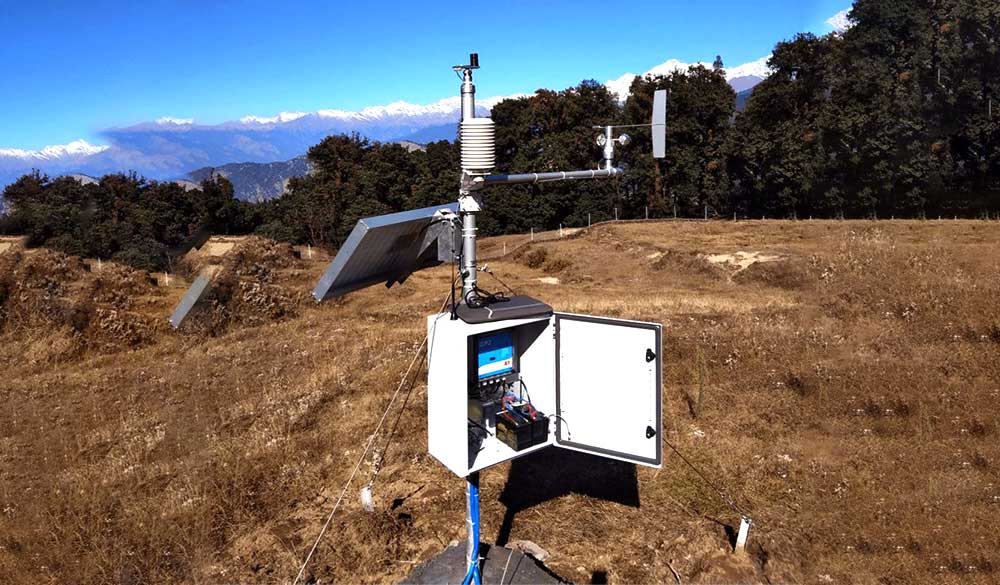
An Automatic Weather Station is a smart environmental monitoring solution, and Automatic Weather Station in Bangladesh helps organizations collect reliable weather information for agriculture, research, environmental management, infrastructure planning, and disaster preparedness. Modern weather stations use sensors, data loggers, communication systems, power equipment, and software to measure and record local atmospheric conditions. Depending on the application, a station can monitor temperature, humidity, rainfall, wind speed, wind direction, atmospheric pressure, solar radiation, and other environmental parameters. Automated measurement reduces the need for continuous manual observation and provides organized data for analysis. This is particularly useful in agricultural and remote locations where regular field visits may be difficult. A properly engineered weather station should operate reliably under rain, humidity, heat, dust, and changing outdoor conditions. Sensor accuracy, installation quality, power reliability, communication, and regular maintenance all influence system performance. Data can be stored locally or transmitted to a central platform for remote access. Engineers, farmers, researchers, environmental professionals, and planners can then use the information to understand weather patterns and support practical decisions. A durable Automatic Weather Station provides a dependable source of local weather information and creates a strong foundation for data driven environmental management.
An Automatic Weather Station uses multiple sensors to collect information about atmospheric conditions. The exact sensor configuration depends on the monitoring objective and the environment where the station is installed. A professional system can be configured to monitor several important parameters, including:
Each sensor must be properly selected, installed, calibrated, and maintained. Sensor placement is important because nearby buildings, trees, walls, machinery, or heat sources can influence measurements. The weather station data logger collects measurements from the sensors and stores them according to the selected monitoring configuration. Communication equipment can then transfer the information to a remote platform. This integrated structure allows users to review current observations and historical records from a centralized system.
Agriculture depends strongly on weather conditions, making accurate local weather information valuable for farm management. An Automatic Weather Station can provide farmers and agricultural professionals with information about rainfall, temperature, humidity, wind, solar radiation, soil moisture, and other conditions relevant to crop production. Weather data can support irrigation planning, crop monitoring, disease risk assessment, field operations, and resource management. Rainfall measurements can help farmers understand natural water availability, while soil moisture information can support more efficient irrigation decisions. Temperature and humidity data can also help agricultural specialists evaluate environmental conditions affecting crop growth. Weather information becomes more useful when combined with crop, soil, and field observations. An automated station can continuously collect measurements without requiring an operator to manually record every observation. This reduces repetitive work and creates a consistent historical dataset. Farmers can access information through dashboards or reports when the system supports remote communication. For agricultural projects, the station should be installed at a representative location and maintained regularly. Reliable weather data can improve farm planning and support more efficient use of water, energy, and other agricultural resources.
Irrigation efficiency depends on understanding both crop requirements and environmental conditions. An Automatic Weather Station can provide weather information that supports irrigation planning when combined with soil and crop data. Rainfall measurements can show how much natural water has reached the field, while temperature, humidity, wind, and solar radiation can help estimate atmospheric water demand. Soil moisture sensors can provide direct information about water availability in the root zone. Together, these measurements create a stronger basis for irrigation management. Automated monitoring can also provide alerts when selected environmental conditions change significantly. Farmers and agricultural managers can use these insights to schedule irrigation more carefully and avoid unnecessary water application. Solar powered weather stations can be particularly useful for agricultural areas where grid electricity is limited. The monitoring system should be designed with reliable sensors, durable enclosures, appropriate communication, and suitable power storage. Weather data should not be interpreted without considering soil type, crop variety, growth stage, and local farm practices. When these factors are evaluated together, automated weather monitoring can contribute to efficient irrigation and more sustainable agricultural water management.
Rainfall is an important environmental parameter for agriculture, water management, flood assessment, and hydrological research. Automatic rainfall monitoring allows organizations to collect local precipitation information continuously and store it for later analysis. A rain gauge installed as part of an Automatic Weather Station measures precipitation and sends information to the station data logger. The collected data can be transmitted to a central monitoring platform when remote communication is available. Local rainfall measurements can be especially valuable because precipitation can vary significantly between locations. Agricultural managers can use rainfall data to understand water availability and support irrigation decisions. Engineers and environmental professionals can use rainfall records for drainage studies, watershed analysis, and infrastructure planning. Long term rainfall datasets can also support climate and environmental research. The rain gauge must be installed correctly so that nearby structures or vegetation do not interfere with precipitation collection. Regular inspection is necessary to remove debris and maintain measurement reliability. Automated rainfall monitoring reduces dependence on manual observation and provides a consistent digital record. When integrated with other weather parameters, rainfall information becomes more useful for understanding complete local weather conditions.
Wind measurements are important for meteorological studies, agriculture, environmental assessment, infrastructure planning, and renewable energy applications. An Automatic Weather Station can use an anemometer to measure wind speed and a wind vane to determine wind direction. These sensors provide information about how air movement changes over time. Wind data can support agricultural spraying decisions because strong or changing winds may affect application safety and distribution. Engineers can use wind information when evaluating structures, ventilation systems, and environmental conditions. Solar and wind energy projects can also benefit from accurate local weather observations. Sensor installation requires careful attention to height, surrounding obstacles, and exposure. Trees, buildings, and other structures can create turbulence and influence measurements. The equipment should be firmly mounted and protected against harsh outdoor conditions. Wind sensors require regular inspection to ensure that moving components remain functional. Data loggers can record measurements and communication systems can transmit them to remote platforms. When combined with temperature, humidity, rainfall, and solar radiation data, wind measurements provide a more complete picture of local atmospheric conditions and improve the usefulness of an automated weather monitoring system.
Temperature and humidity are fundamental measurements for agriculture, environmental monitoring, storage facilities, research, and weather analysis. An Automatic Weather Station can continuously record air temperature and relative humidity using dedicated sensors. These measurements help users understand local atmospheric conditions and identify changes throughout the day and across different seasons. Agricultural applications can use temperature and humidity data to support crop management and environmental analysis. High humidity combined with suitable temperature conditions may influence certain crop disease risks, while temperature information can support growing condition assessments. Industrial and storage applications can also use environmental measurements to monitor sensitive areas. Sensors should be installed inside appropriate radiation shields or protective systems so that direct sunlight and environmental exposure do not distort measurements. Ventilation around the sensor is important for obtaining representative air conditions. Regular calibration and inspection can help maintain accuracy. Data should be recorded with appropriate timestamps and stored securely for future analysis. Remote dashboards can allow authorized users to review current and historical conditions. Reliable temperature and humidity monitoring provides essential information for understanding local weather and supporting decisions across agricultural, environmental, and industrial applications.
Solar radiation is an important environmental parameter for both agriculture and renewable energy systems. A suitable Automatic Weather Station can include solar radiation sensors to measure the amount of incoming solar energy at the monitoring location. Agricultural professionals can use this information to study crop growth conditions, evapotranspiration, and field microclimates. Solar energy project developers and engineers can also use solar radiation data to evaluate site conditions and understand photovoltaic system performance. Measurement quality depends on proper sensor positioning, clean sensor surfaces, and regular maintenance. The sensor should have an unobstructed view of the sky and be installed according to suitable technical requirements. Dust, dirt, water, and shading can affect measurements and should be addressed through routine inspection. Solar radiation data becomes more useful when analyzed alongside temperature, humidity, rainfall, and wind conditions. A weather monitoring platform can store these measurements and provide graphical reports for technical analysis. Reliable solar radiation information supports better understanding of environmental conditions and can contribute to improved agricultural planning and renewable energy assessment.
The data logger is an important component of an Automatic Weather Station because it receives information from connected sensors and organizes measurements for storage and transmission. A reliable data logger should support the required sensor interfaces, data recording functions, communication options, and environmental conditions. It can store measurements locally when communication is unavailable and transmit them when a connection becomes available. This provides additional resilience for remote monitoring locations. Data should include accurate timestamps and appropriate measurement units so that records can be analyzed correctly. Local storage can protect against temporary network interruptions, while cloud or server based platforms can provide centralized access. The data logger enclosure should protect electronic components against moisture, dust, heat, and other outdoor hazards. Backup procedures are important because historical weather records can have significant value for agricultural and environmental studies. Users should also have access controls to prevent unauthorized modification of important datasets. A well designed data logging system ensures that measurements from different sensors remain organized and traceable. It forms the connection between field sensors and analytical software, making it essential for reliable long term weather monitoring.
Remote communication allows users to access weather information without visiting the monitoring station physically. An Automatic Weather Station can use suitable communication technologies to send sensor measurements to a web based dashboard, server, or mobile platform. This is useful for farms, research sites, environmental stations, industrial facilities, and remote locations. Cellular, wireless, radio, or other communication methods can be selected according to local coverage and project requirements. A remote monitoring system can provide alerts when measurements reach defined conditions or when communication with the station is interrupted. Local data storage should remain available where possible so that measurements are not permanently lost during network outages. Communication equipment must be protected from moisture, lightning, dust, and other environmental hazards. Power consumption should also be considered when designing remote stations. Solar panels and battery systems can support autonomous operation where grid electricity is unavailable. Remote monitoring reduces the need for frequent site visits and allows technical teams to review system performance from a central location. When combined with reliable sensors and secure data management, remote communication creates an efficient monitoring network for distributed weather stations.
A solar powered Automatic Weather Station can operate independently of the electrical grid and is suitable for agricultural fields, research locations, wetlands, remote environmental sites, and other areas with limited infrastructure. The system normally combines solar panels, a charge controller, batteries, sensors, a data logger, and communication equipment. Proper energy management is essential because the station must continue operating during periods of limited sunlight. Battery capacity, sensor consumption, communication requirements, and local weather conditions should be considered during system design. Solar panels should be installed in an unobstructed location and kept clean to maintain effective energy generation. Batteries and electronic equipment should be protected from excessive heat, moisture, and physical damage. The station can be designed for autonomous operation, reducing dependence on grid electricity and minimizing the need for frequent site visits. Solar power also supports environmentally responsible monitoring because the system uses renewable energy for field operations. Regular maintenance should include checking the solar panel, battery condition, wiring, connectors, and protective enclosure. A properly engineered solar powered weather station can provide reliable environmental measurements in locations where conventional power infrastructure is difficult to establish.
Environmental researchers require reliable datasets to understand relationships between weather and environmental conditions. Automatic weather stations can provide continuous measurements that support studies related to agriculture, water resources, vegetation, ecosystems, pollution, and climate patterns. Local weather data can be combined with satellite imagery, soil measurements, water quality information, and geographic datasets to create comprehensive environmental models. Historical records are particularly valuable because they allow researchers to compare conditions across different periods. Data quality is critical for scientific applications. Sensors should be properly calibrated, maintained, and documented, while station locations should be selected according to research objectives. Metadata should record information about sensor types, installation conditions, measurement methods, and maintenance activities. Automated collection can reduce manual errors and improve the consistency of field measurements. Researchers can access data through centralized platforms and use analytical software to identify trends and relationships. A well maintained Automatic Weather Station can become a long term environmental data source that supports scientific research and evidence based planning. The system should be designed with appropriate storage, communication, backup, and quality control features to preserve data integrity throughout the monitoring project.
Weather information can support disaster preparedness by providing observations about rainfall, wind, temperature, pressure, and other environmental conditions. Automatic Weather Stations can be installed in strategic locations to collect local measurements and transmit them to monitoring centers. Rainfall data can support flood and drainage assessments, while wind measurements can provide information about developing weather conditions. Water level sensors can also be integrated into broader environmental monitoring networks where hydrological information is required. Automated alerts can notify responsible teams when selected thresholds are reached. Reliable communication is particularly important during severe weather because network and power disruptions can affect monitoring operations. Remote stations may therefore require solar power, battery storage, and local data logging. Equipment should be installed securely and protected against heavy rain, lightning, flooding, and physical damage. Weather monitoring does not replace official forecasting or emergency management procedures, but it can provide valuable local observations. Combining automated weather data with geographic information and professional analysis can improve situational awareness. Durable monitoring infrastructure can support long term environmental observation and help organizations develop better preparedness strategies for weather related risks.
Operating an Automatic Weather Station in Bangladesh requires careful engineering because field environments can expose equipment to high humidity, heavy rainfall, heat, dust, lightning, flooding, and physical damage. Sensor calibration and maintenance are also important for maintaining reliable measurements. Remote sites may have limited electricity and communication connectivity, making autonomous power and local data storage valuable. Station installation must consider environmental exposure, sensor height, surrounding structures, drainage, security, and accessibility for maintenance. Common maintenance activities can include:
A monitoring system should be designed for long term operation rather than only initial installation. Replacement components, technical support, software updates, and maintenance schedules should be considered from the beginning. Proper training can also help local operators identify equipment problems and perform basic inspections. A practical weather station should balance technical capability with reliability and ease of maintenance.
The future of Automatic Weather Station technology in Bangladesh is closely connected with IoT, cloud computing, remote sensing, artificial intelligence, renewable energy, and advanced data analysis. Connected weather stations can create distributed monitoring networks that provide information from farms, research locations, cities, industrial areas, and environmental sites. Cloud platforms can store large historical datasets and make information accessible to authorized users through dashboards. Artificial intelligence can help identify unusual weather patterns or sensor anomalies when sufficient quality data is available. Integration with agricultural systems can support smart irrigation, crop monitoring, and farm planning. Weather information can also be combined with geographic data, water monitoring, and environmental sensors to create comprehensive decision support systems. Solar powered stations can expand monitoring into remote areas without reliable grid electricity. Future systems should continue to prioritize sensor accuracy, cybersecurity, durability, data quality, and easy maintenance. Automated technology should support professional analysis rather than operate without appropriate oversight. With proper engineering and long term management, weather monitoring networks can provide valuable information for agriculture, environmental protection, research, infrastructure planning, and disaster preparedness. Reliable local weather data can therefore contribute to more informed and sustainable development across Bangladesh.
An Automatic Weather Station provides a dependable method for collecting local atmospheric and environmental information. Automatic Weather Station in Bangladesh can support agriculture, irrigation management, environmental research, renewable energy assessment, infrastructure planning, disaster preparedness, and weather analysis. A complete system can combine temperature, humidity, rainfall, wind, atmospheric pressure, solar radiation, soil sensors, data logging, communication, and renewable power according to the project requirements. The quality of the final data depends on proper sensor selection, accurate installation, regular calibration, reliable power, effective communication, and continuous maintenance. Solar powered systems can make remote monitoring practical where grid electricity is unavailable, while local data storage can protect measurements during communication interruptions. Remote dashboards allow authorized users to access information without visiting the field regularly. Environmental durability is especially important because outdoor monitoring equipment must withstand changing weather conditions. Future systems will increasingly connect automated stations with IoT platforms, geographic information systems, cloud storage, and advanced analytics. However, professional interpretation and technical maintenance will remain essential. By combining reliable engineering with appropriate monitoring practices, organizations can develop weather information systems that provide valuable data for better planning, efficient resource management, environmental protection, and sustainable agricultural development in Bangladesh.