Find answers to common questions about Particle Counter
Particle Counter Price in Bangladesh depends on several factors, including the number of particle size channels, particle concentration range, flow system, measurement accuracy, data storage, display, connectivity, battery configuration, and overall instrument design.
Basic portable instruments may be suitable for general environmental monitoring, while advanced particle counters can provide detailed measurements for cleanrooms, laboratories, manufacturing facilities, and controlled environments.
When evaluating a particle counter, users should consider the complete measurement requirements rather than focusing only on the initial purchase cost. Calibration availability, technical support, warranty, accessories, and software can also influence long-term usability.
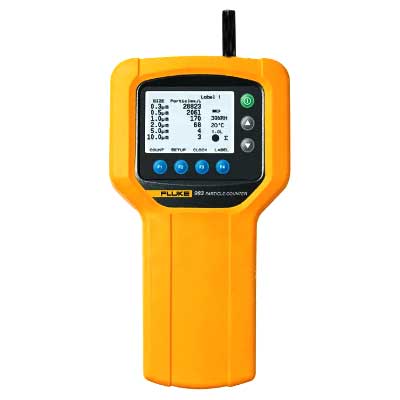
A particle counter is an instrument designed to detect and quantify airborne particles within a defined measurement environment. It can help users understand particle concentration and distribution across different particle size ranges.
Particle counters are commonly used for cleanroom monitoring, HVAC assessment, environmental testing, contamination control, pharmaceutical manufacturing, electronics production, laboratories, and industrial quality control.
Depending on the instrument, measurements can be displayed in real time and stored for later analysis. This makes particle counters useful for routine inspections as well as documented environmental monitoring programs.
Important features include particle size channels, measurement sensitivity, flow rate, sampling duration, data storage, display quality, battery life, and connectivity. Advanced instruments may provide alarm functions, location tagging, report generation, and computer or mobile software integration.
For cleanroom applications, users should pay particular attention to measurement sensitivity, repeatability, calibration support, and suitability for the intended monitoring procedure.
Portable design and intuitive controls can be valuable for field technicians who need to move between different sampling locations. The instrument should also be appropriate for the environmental conditions where it will be used.
Particle counters can be used in a wide range of controlled and industrial environments in Bangladesh. Common applications include pharmaceutical facilities, hospitals, cleanrooms, laboratories, electronics manufacturing, food processing, HVAC systems, research facilities, and industrial production areas.
They can help professionals assess airborne particle conditions and identify changes that may indicate contamination or ventilation-related issues.
The appropriate particle counter depends on the required particle size range, sensitivity, sampling method, environmental conditions, and applicable quality control procedures.
A particle counter provides quantitative information about airborne particulate conditions, allowing professionals to make decisions based on measured data rather than visual observation alone.
Regular particle monitoring can help identify contamination trends, assess controlled environments, evaluate filtration performance, and support cleaning and maintenance programs.
In manufacturing and laboratory environments, documented particle measurements can also contribute to quality assurance and environmental control procedures. Data logging and reporting functions can make it easier to compare measurements taken at different locations or times.
Particle counting equipment is used in pharmaceutical manufacturing, healthcare, electronics, semiconductor production, laboratories, food processing, cleanroom operations, HVAC services, research facilities, and industrial quality control.
Pharmaceutical and healthcare environments may use particle counters for controlled-environment monitoring. Electronics and precision manufacturing facilities can use them to detect airborne contamination that may affect sensitive processes.
HVAC and environmental professionals may also use portable particle counters during inspections and assessments of indoor air and filtration systems.
Start by identifying the particle sizes and concentration levels that need to be measured. Then consider sensitivity, particle size channels, sampling flow, measurement duration, data storage, connectivity, and reporting requirements.
For cleanroom applications, calibration and compliance-related documentation may be especially important. For general field monitoring, portability, battery performance, and ease of operation may have greater importance.
When comparing Particle Counter Price in Bangladesh, also evaluate calibration services, warranty, technical support, software, accessories, and availability of replacement components. Selecting an instrument based on the intended application helps ensure reliable and useful measurements.
Purchase from a reputable supplier and verify the manufacturer's information, model number, specifications, serial number, and supporting documentation. The technical specifications should clearly state the instrument's measurement capabilities and intended application.
For professional and regulated environments, ask about calibration documentation and service availability. Calibration status can be particularly important when measurement results are used for quality control or environmental certification activities.
It is also advisable to confirm that the supplied accessories, software, manuals, and other components are appropriate for the selected model.
Yes. Particle counters are precision measurement instruments, and dependable after-sales support can be important for maintaining measurement performance over time.
Before purchasing, confirm warranty coverage, service procedures, calibration options, technical assistance, and availability of accessories. Users should also understand the recommended maintenance requirements and procedures for keeping the instrument in suitable operating condition.
For organizations that depend on regular particle monitoring, access to qualified technical support and calibration services can help reduce equipment downtime and maintain confidence in measurement results.
To order a particle counter, first define the intended application and required measurement parameters. Consider particle size ranges, sensitivity, sampling requirements, data logging, environmental conditions, and reporting needs.
Ask the supplier for the technical datasheet, available configuration, included accessories, warranty information, calibration documentation, and delivery details before confirming the order.
For an accurate Particle Counter Price in Bangladesh, request a current quotation for the specific model and configuration you require. This provides a more useful comparison than relying on a general market price because particle counters can differ significantly in capabilities and specifications.
Connect WhatsApp!Usually Replies Instantly!
Customer Support
Hello! Welcome to Advance Engineering Solutions. How can we help you today?