Insulation Testing
- Home
- Solutions

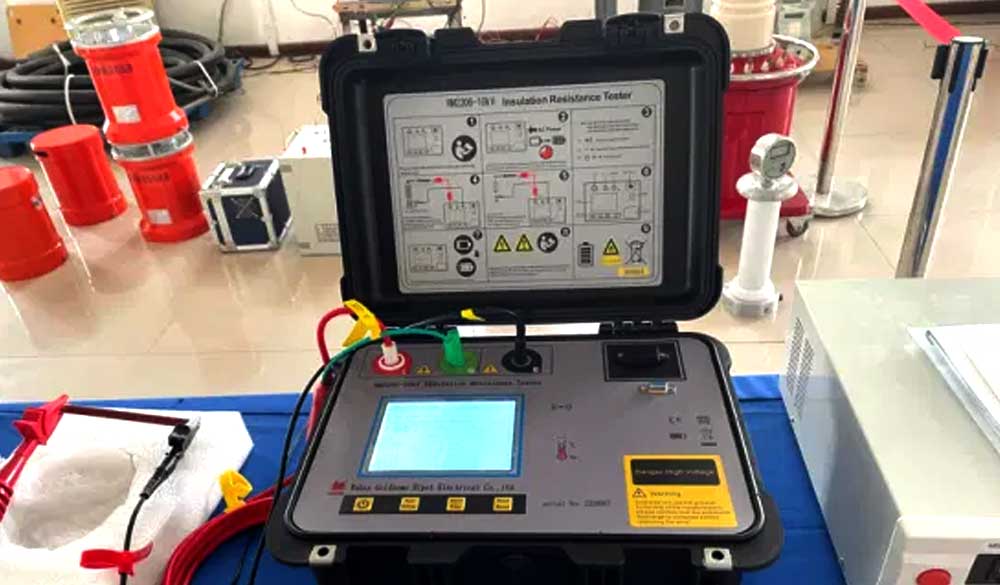
Electrical insulation is essential for protecting people, equipment, and power systems from unwanted current flow, and Insulation Testing Service in Bangladesh helps industries assess the condition and reliability of electrical insulation. Proper insulation separates energized conductors from grounded components and other conductive parts. Over time, insulation can deteriorate because of heat, moisture, contamination, mechanical stress, vibration, electrical loading, and aging. These conditions can increase leakage current and create the possibility of short circuits, equipment failure, electric shock, or fire. Professional insulation testing helps identify such weaknesses before they become serious problems. The service can be applied to cables, motors, generators, transformers, switchgear, control panels, distribution systems, and other electrical equipment. Engineers use suitable testing methods and instruments according to equipment characteristics, operating conditions, and applicable requirements to evaluate insulation condition and support reliable electrical maintenance.
Electrical insulation may gradually lose its original performance without showing obvious external signs. A machine can continue operating while its insulation condition is slowly declining. Insulation testing provides engineers with useful information about this hidden condition and helps determine whether corrective maintenance is required.
Regular insulation testing can support:
Testing is particularly valuable in industrial environments where electrical equipment operates continuously under demanding conditions. A structured testing program helps organizations identify developing insulation problems before they cause major operational or safety issues.
Insulation resistance testing is one of the most common methods used to assess electrical insulation. The test evaluates the resistance offered by insulation between conductors and between conductors and ground. A healthy insulation system generally provides high resistance, while deterioration can result in reduced resistance.
Engineers use suitable insulation resistance testers based on the equipment and application. The test procedure should consider the equipment design, voltage class, insulation material, environmental conditions, and manufacturer recommendations.
Insulation resistance testing can help identify:
Test results should be properly recorded and reviewed with other available equipment information. A single measurement may provide useful information, but comparison with historical results can offer a better understanding of long term insulation condition.
Electrical cables rely on insulation to maintain separation between conductors and prevent unwanted current flow to ground. Cable insulation can be affected by installation stress, moisture, mechanical damage, heat, chemicals, and long term service conditions.
Insulation testing can be performed during cable installation, commissioning, maintenance, troubleshooting, and periodic condition assessment. Engineers select an appropriate testing method according to cable construction and system requirements.
Cable insulation testing can help detect:
Testing newly installed cables before energization provides additional confidence that the cable system is suitable for service. Periodic assessment can also help identify changes in insulation condition over time.
Electric motors operate under thermal, electrical, and mechanical stress. Their winding insulation is particularly important because deterioration can lead to winding faults, motor failure, production interruption, and expensive repairs.
Insulation testing can help assess the condition of motor windings before commissioning, during preventive maintenance, or after repair and rewinding work. Engineers may review insulation resistance and other relevant characteristics to understand the overall condition of the motor.
Motor insulation testing can support:
Regular testing provides maintenance teams with useful information for deciding whether a motor requires cleaning, drying, repair, further diagnostic testing, or continued operation.
Generators contain winding insulation that must remain reliable during electrical generation. Continuous operation, heat, moisture, contamination, vibration, and electrical stress can affect the insulation system over time.
Insulation testing provides a practical method for assessing generator winding condition. Testing may be performed during commissioning, scheduled maintenance, shutdown inspections, or after repair activities.
Generator insulation assessment can help identify:
The test method should be selected carefully according to generator construction and applicable technical requirements. Proper testing helps reduce the risk of unexpected generator faults and supports dependable power generation.
Transformers depend on reliable insulation between windings, grounded components, terminals, and other conductive structures. Insulation deterioration can result from thermal aging, moisture, contamination, electrical stress, or mechanical movement.
Insulation testing is an important part of transformer maintenance and condition assessment. Engineers can use appropriate testing methods to evaluate insulation resistance and identify changes in insulation behavior.
Transformer insulation testing can support:
Testing results should be interpreted in relation to transformer design, operating history, environmental conditions, and previous test records. This approach provides a more meaningful assessment of transformer insulation health.
Switchgear and electrical panels contain multiple conductive components that require proper insulation to maintain safe electrical separation. Insulation deterioration can result in leakage, phase faults, ground faults, or equipment failure.
Testing can be performed during commissioning, maintenance, refurbishment, and troubleshooting. Engineers may assess insulation between phases and between energized components and ground where appropriate.
Switchgear and panel insulation testing can help identify:
Regular inspection and testing can help maintain reliable operation of electrical distribution equipment and reduce the possibility of unexpected protection problems.
Megger testing is a commonly used term for insulation resistance testing performed with a specialized insulation resistance tester. The instrument applies a controlled test voltage and measures the resulting insulation resistance.
The testing process must be adapted to the equipment being evaluated. Sensitive electronic devices and connected components may require isolation before testing because the applied test voltage may not be suitable for every component.
Megger testing can provide useful information about:
Engineers should interpret the measured value according to equipment type, test conditions, applicable requirements, and historical performance rather than relying only on a general reference value.
High voltage insulation testing evaluates the ability of insulation to withstand electrical stress under controlled conditions. Depending on the equipment and testing objective, this may involve specialized dielectric withstand or other high voltage test methods.
High voltage testing is useful for selected electrical equipment and systems where insulation strength needs to be verified. Because the test can involve hazardous electrical energy, it requires suitable equipment, trained personnel, controlled access, and strict safety procedures.
Applications may include:
The appropriate test method should always be selected according to equipment design and applicable technical requirements.
Insulation testing is an important part of electrical commissioning because installation activities can affect insulation condition. Cables, panels, motors, transformers, and other electrical equipment may experience mechanical stress, contamination, moisture exposure, or incorrect connections during installation.
Testing before energization helps identify potential insulation problems before the equipment becomes operational.
Commissioning activities may include:
A properly organized commissioning process can reduce the risk of discovering insulation problems after electrical equipment has already been energized.
Preventive insulation testing helps organizations identify deterioration before it develops into an electrical failure. Instead of waiting for a fault to occur, maintenance teams can use periodic testing to monitor equipment condition and identify changes.
The appropriate testing interval depends on equipment type, operating environment, duty cycle, age, criticality, manufacturer recommendations, and previous test results.
Preventive insulation testing can help organizations:
Historical test records are especially useful because trends in insulation performance can reveal gradual deterioration that may not be apparent from an individual inspection.
Industrial facilities contain a wide range of electrical equipment operating under demanding conditions. Motors, transformers, generators, switchgear, cables, control panels, and distribution systems all depend on reliable insulation.
Industrial insulation testing can be integrated into a broader electrical maintenance program. Engineers can prioritize critical equipment according to operational importance, environmental exposure, age, and previous test results.
Industrial applications may include:
A systematic approach helps maintenance teams focus resources on equipment where insulation deterioration could have the greatest operational impact.
Insulation testing can be an effective troubleshooting tool when electrical equipment shows abnormal behavior. Repeated breaker trips, unexpected leakage, overheating, motor faults, or ground faults may indicate insulation problems.
Engineers can combine insulation resistance measurements with visual inspection and other electrical diagnostic methods to identify possible fault locations.
Fault investigation may include:
Accurate diagnosis helps reduce unnecessary equipment replacement and allows maintenance teams to address the actual cause of the electrical problem.
Reliable insulation testing depends on selecting suitable test equipment and using correct measurement techniques. Modern insulation resistance testers can provide controlled test voltage, resistance measurement, automatic discharge functions, data recording, and other useful features.
The equipment selection should consider the application, insulation type, electrical system, testing objective, and required measurement capability.
Important considerations include:
Proper instrument maintenance and calibration are also important. Reliable equipment helps engineers obtain meaningful results and maintain confidence in the testing process.
Safety is essential when performing electrical insulation testing. Depending on the testing method, the equipment may be exposed to elevated test voltages. Personnel must therefore follow suitable isolation, grounding, discharge, and access control procedures.
Before testing, engineers should confirm the equipment under test, identify connected components, verify isolation, and inspect test leads and connections.
Important safety practices include:
Professional procedures protect personnel and equipment while helping ensure that test results are accurate and repeatable.
Technical documentation is an important part of professional insulation testing. A clear report provides a permanent record of the equipment condition and testing activities. This information can be valuable for maintenance teams, facility owners, consultants, and future inspections.
A typical report may include:
Proper documentation also helps organizations develop historical records for electrical assets. Comparing current and previous results can help engineers identify gradual changes in insulation performance and make better maintenance decisions.
A professional Insulation Testing Service in Bangladesh provides reliable electrical insulation assessment using appropriate test instruments, experienced engineers, controlled procedures, and clear technical documentation. The service can support industrial facilities, commercial buildings, electrical contractors, manufacturers, power installations, and maintenance teams.
Professional insulation testing can cover:
Reliable insulation testing helps identify electrical weaknesses before they develop into serious equipment failures or safety hazards. By combining suitable test methods with proper safety procedures and experienced technical assessment, organizations can improve the reliability of their electrical systems and make informed maintenance decisions. Regular insulation assessment also supports better asset management, reduces the possibility of unexpected electrical faults, and contributes to safer long term operation. For industries and electrical facilities in Bangladesh, professional insulation testing is an important part of maintaining dependable power systems and protecting valuable electrical equipment.