Cattle Monitoring
- Home
- Industries

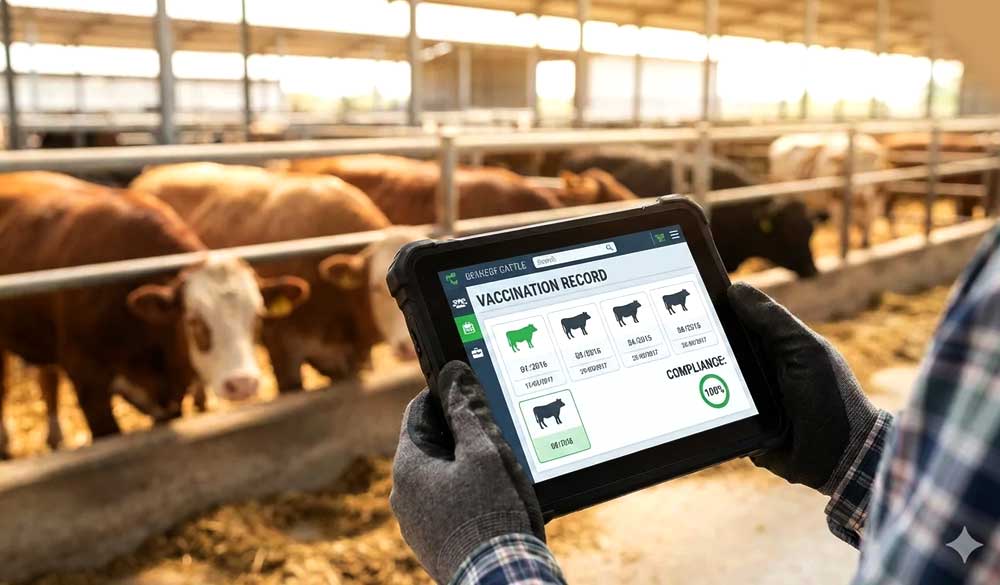
Smart livestock technology is creating new opportunities for efficient animal management, and Cattle Monitoring in Bangladesh provides a practical approach to improving cattle health, safety, productivity, and farm operations. Cattle monitoring combines animal observation with digital technologies such as wearable sensors, location tracking, health monitoring devices, environmental sensors, automated feeding systems, and remote management platforms. These technologies can help farmers collect useful information about animal activity, feeding behavior, movement, body condition, and environmental conditions. Bangladesh has a growing livestock sector, and cattle farming plays an important role in rural livelihoods, dairy production, meat production, and agricultural development. Traditional observation remains essential, but smart monitoring can provide additional information that may be difficult to collect through manual inspection alone. A properly designed cattle monitoring system can help farmers identify unusual behavior, monitor important health indicators, manage feeding routines, improve farm security, and maintain better records. The objective is not to replace farmers or veterinary professionals. Instead, monitoring technology supports their decisions with timely and organized information. Reliable equipment, suitable sensors, durable communication systems, and simple software are important for successful implementation in demanding agricultural environments.
Cattle require regular observation because their health and productivity can be influenced by nutrition, disease, temperature, housing conditions, water availability, movement, and general management. Manual inspection allows farmers to recognize visible changes, but animals may sometimes show subtle signs of illness or stress before obvious symptoms become visible. Smart monitoring can provide additional information about changes in activity and behavior. A sudden reduction in movement, unusual resting patterns, changes in feeding behavior, or altered activity may indicate that an animal requires closer inspection. Monitoring can also help farmers maintain organized records for individual animals. This information can support better decisions about feeding, breeding, veterinary care, and general herd management. In larger farms, digital monitoring can reduce the difficulty of observing every animal continuously. Remote alerts can notify farm operators when specific conditions require attention. However, monitoring devices should not be treated as a replacement for physical examination. Veterinary professionals should be consulted when animals show signs of illness or abnormal health conditions. The most effective approach combines farmer experience, veterinary knowledge, and reliable monitoring technology. This integrated method can improve animal welfare and help farmers manage livestock more efficiently.
Animal health monitoring is one of the most valuable applications of smart livestock technology. Wearable sensors can collect information related to movement, activity, body temperature, or other measurable indicators depending on the device. Changes from an animal's normal behavior may help identify situations requiring closer observation. Continuous monitoring can be particularly useful because farmers may not always notice subtle changes during routine visits. Health data can be stored digitally, allowing farmers and veterinary professionals to review historical patterns. This can support more informed health management and improve record keeping. Monitoring devices should be selected according to the animal type, farm environment, and required measurements. Cattle can move through wet, dusty, and physically demanding environments, so devices should be designed for agricultural use and protected against suitable environmental conditions. Sensors must also be fitted correctly to avoid discomfort or inaccurate measurements. Battery performance and communication reliability are important for wearable monitoring systems. Alerts should be configured carefully so that farmers receive useful notifications without being overwhelmed by unnecessary warnings. Smart health monitoring is most effective when unusual readings are treated as signals for further inspection rather than automatic diagnoses. This approach supports early attention while maintaining the important role of professional veterinary assessment.
Cattle tracking technology can help farmers understand where animals are located and how they move around a farm. Location monitoring may use GPS devices, radio frequency systems, tags, or other suitable technologies depending on the size and structure of the farm. Tracking can be useful for open grazing areas, large cattle farms, breeding facilities, and managed livestock operations. Farmers can identify whether animals remain within designated areas and receive alerts when an animal moves beyond an expected boundary. This can improve farm security and reduce the difficulty of locating individual cattle. Digital identification can also help maintain records associated with specific animals. Tracking information may provide insight into grazing behavior, movement patterns, and activity levels. The technology should be selected according to local communication availability, terrain, animal management practices, and power requirements. Devices must be securely attached without causing discomfort or interfering with normal animal behavior. Outdoor equipment should be protected against rain, dust, heat, and physical impact. Location tracking should complement proper fencing, supervision, and animal identification practices. When integrated with health and farm management systems, cattle tracking can provide a more complete view of livestock operations and improve the efficiency of daily farm activities.
Digital identification allows individual cattle to be recognized and connected with their management records. Radio frequency identification technology can use electronic tags that are scanned by compatible readers. These systems can help farmers record information about animal health, vaccination, feeding, breeding, movement, and veterinary care. Digital identification reduces dependence on handwritten records and can improve traceability when properly managed. Each animal can have an associated profile containing relevant information that authorized users can update when necessary. This is particularly useful for farms that manage large herds or require organized livestock records. RFID systems should be designed to operate reliably in agricultural environments. Readers should be positioned where animals naturally pass, while tags should be securely attached according to appropriate animal welfare practices. Data from identification systems can be connected with farm management software to create a centralized record. This allows farmers to review individual animal histories and support more consistent management. Digital identification can also improve record accuracy by reducing confusion between animals with similar physical characteristics. However, electronic identification should be combined with appropriate physical identification and record backup procedures. A well managed system provides a reliable foundation for smart cattle monitoring and more organized livestock management.
Proper nutrition is essential for cattle health, growth, milk production, and overall productivity. Smart feeding systems can help farmers manage feeding schedules, monitor consumption patterns, and improve the consistency of livestock nutrition. Automated feeders can deliver controlled quantities of feed according to programmed requirements, while monitoring systems can record feeding activity where suitable technology is available. Changes in feeding behavior can also provide useful information about animal health. If an animal suddenly becomes less interested in feed, the change may require closer observation. Feed management data can help farmers understand consumption patterns and identify differences between animals or groups. Water availability is equally important, and smart water monitoring systems can help ensure that drinking facilities remain functional. Automated systems should always be designed around appropriate nutritional guidance from livestock professionals. Technology cannot determine the complete dietary needs of cattle without considering breed, age, production stage, health, and environmental conditions. Feed storage and delivery equipment should also be maintained properly to prevent contamination and mechanical problems. Combining nutritional knowledge with monitoring technology can improve feeding consistency, reduce avoidable waste, and support better livestock management.
Cattle behavior can provide valuable information about animal well being and farm conditions. Monitoring movement, resting, feeding, drinking, and social behavior can help farmers identify unusual patterns. Wearable activity sensors can record movement throughout the day and provide information that may be difficult to collect through manual observation. Behavioral changes can sometimes occur when cattle experience illness, stress, injury, heat, poor nutrition, or changes in their surroundings. Automated monitoring can therefore support earlier investigation of potential problems. However, animal behavior naturally changes according to environmental conditions and management routines. Farmers should interpret monitoring data according to normal behavior for their specific cattle and farm environment. Sudden changes may be more meaningful when compared with an established baseline. Data should be presented in a simple format so that farm workers can quickly identify animals requiring attention. Alerts can be useful when significant deviations occur, but excessive alerts can reduce their practical value. Behavioral monitoring should work alongside visual inspection and veterinary assessment. When properly configured, it can help farmers spend more time investigating animals that show unusual patterns and improve the overall efficiency of herd management.
Heat stress is an important livestock management concern because high temperatures and humidity can affect cattle behavior, feed intake, water consumption, comfort, and productivity. Environmental monitoring systems can measure temperature and humidity inside cattle housing areas. These measurements can help farmers understand when conditions may require additional ventilation, shade, water access, or other management actions. Activity monitoring can also provide information about changes in animal behavior during stressful environmental conditions. Smart ventilation systems can operate fans or other equipment when environmental conditions reach defined thresholds. Water monitoring can help ensure that drinking systems remain available and functional. Farm buildings should also be designed with appropriate ventilation and shade according to local conditions. Technology should support these basic management practices rather than replace them. Monitoring systems can provide alerts when environmental conditions become unsuitable, allowing farmers to respond more quickly. Sensors should be positioned carefully because measurements taken near direct sunlight, machinery, or poorly ventilated areas may not represent the actual conditions experienced by animals. A well designed heat stress monitoring system can improve awareness of environmental conditions and support better cattle welfare during periods of high temperature and humidity.
Breeding management requires accurate records and careful observation of animal behavior. Smart monitoring can assist farmers by identifying changes in activity that may be associated with reproductive behavior. Activity sensors can provide information about movement patterns, while digital animal records can organize breeding history and related management information. These tools can help farmers identify animals that require closer observation. Accurate records can also support better planning and reduce the risk of missing important reproductive events. However, sensor data should not be treated as a definitive reproductive diagnosis. Veterinary professionals and experienced livestock managers remain important for confirming reproductive conditions and selecting appropriate breeding procedures. Digital systems can record health history, previous breeding information, and other relevant observations in an organized format. This can make herd management more systematic. Breeding monitoring systems should be integrated with animal identification so that information remains associated with the correct cattle. Data security and backup are also important because breeding records can have long term management value. By combining smart monitoring with professional livestock management, farmers can improve reproductive record keeping and respond more efficiently to relevant behavioral changes.
The environment in which cattle are kept has a direct influence on animal comfort, health, and productivity. Smart environmental monitoring can measure temperature, humidity, ventilation conditions, water availability, and other relevant factors within cattle housing areas. Sensors can provide continuous information that helps farmers identify environmental changes before they create serious problems. Automated ventilation systems can respond to temperature or air quality conditions where suitable equipment is installed. Water level sensors can monitor storage tanks and drinking systems, while flow monitoring can help identify possible interruptions. Lighting and electrical systems can also be monitored where required. Equipment used in cattle environments should be protected against moisture, dust, and physical damage. Sensors should be cleaned and checked regularly to maintain accurate readings. Environmental monitoring should be designed around actual livestock needs rather than unnecessary data collection. Information should be displayed through a simple dashboard or alert system that farm workers can understand. When environmental monitoring is connected with animal behavior and health information, farmers can better understand relationships between housing conditions and cattle performance. This integrated approach can support improved animal welfare and more reliable farm operations.
Clean and reliable water is essential for cattle, making water management an important part of smart livestock farming. Monitoring systems can track water tank levels, pump operation, flow conditions, and drinking system availability. Alerts can notify farm operators when water storage becomes low or when a pumping system stops operating. Solar powered water pumping can provide a renewable energy source for cattle farms, especially in rural locations where electricity access may be limited. Water storage tanks can help maintain supply when pumping conditions change. Automatic controls can operate pumps according to water requirements and storage conditions. Pipes, valves, filters, tanks, and drinking equipment should be selected for durability and easy maintenance. Water quality should also be monitored according to appropriate livestock management practices because unsuitable water can affect animal health. Smart monitoring does not replace regular cleaning and physical inspection of drinking facilities. Sensors and control equipment should be protected from moisture and accidental damage. By combining water monitoring, efficient pumping, storage, and regular maintenance, cattle farms can maintain a more dependable water supply. This can improve farm reliability and support better livestock welfare.
Remote monitoring allows farmers and livestock managers to review important farm conditions without being physically present at every location. Connected sensors can transmit information about cattle activity, environmental conditions, water levels, equipment status, and other selected parameters. A mobile application or web based dashboard can display alerts and operational information. This can be especially useful for large farms, remote grazing areas, and facilities that require continuous supervision. Remote monitoring can help farmers respond quickly when equipment stops operating or when an animal shows an unusual pattern. Communication technology should be selected according to network availability and farm location. In areas with limited connectivity, local control systems can continue performing essential functions even when remote communication is temporarily unavailable. Solar power can support remote monitoring equipment where grid electricity is difficult to access. Devices should be protected against weather, dust, animals, and physical impact. Remote monitoring should provide concise and meaningful information rather than excessive notifications. Farm operators should also have the ability to inspect animals directly when an alert is generated. A well designed remote system improves visibility and can reduce the time required to identify operational problems.
Digital health records provide an organized way to store information about individual cattle and herd management activities. Records can include animal identification, vaccination history, veterinary observations, feeding information, breeding activities, health events, and other relevant details. When monitoring sensors are connected to these records, farmers can compare current observations with historical information. This can help identify changes in an animal's normal behavior or management history. Digital records can also improve communication between farmers, farm managers, and veterinary professionals. Data should be entered consistently and protected from unauthorized access. Backup systems are important to prevent the loss of valuable livestock records. A farm management platform should have a simple interface so that workers can update information without unnecessary difficulty. Search and filtering functions can help users find the records of individual animals quickly. Historical data can also support broader herd analysis and farm planning. For example, managers may identify recurring health issues or differences in performance between management groups. Reliable records create a stronger foundation for evidence based livestock decisions. Digital data management therefore complements physical cattle monitoring and provides long term value for organized farm management.
Farm security is another useful application of cattle monitoring technology. Location tracking and digital identification can help farmers determine where animals are located and identify unusual movement outside designated areas. Monitoring systems can also observe gates, fences, water systems, and other important farm infrastructure. Alerts can notify authorized personnel when selected security conditions occur. Cameras may provide additional visual information around cattle housing and entry areas. Security equipment should be installed carefully to protect it from weather and accidental damage. Electrical systems should have appropriate protection, particularly in outdoor and livestock environments. Monitoring technology should complement physical fencing, gates, lighting, and regular supervision. Data access should be restricted to authorized users to protect farm information and prevent misuse. For larger cattle operations, centralized monitoring can help management teams coordinate responses when problems occur. Security systems can also support animal welfare by helping farmers locate cattle that have moved into unsafe areas. The goal is to create a reliable monitoring environment that improves awareness without creating unnecessary complexity. When tracking, identification, cameras, and farm records are integrated, cattle managers can improve both operational visibility and livestock safety.
Smart cattle monitoring offers significant benefits, but successful implementation requires careful consideration of local conditions. Rural farms may have limited internet connectivity, inconsistent electricity, or restricted access to technical support. Agricultural environments can also be demanding because devices are exposed to rain, humidity, dust, heat, mud, and physical contact with animals. Sensors and communication equipment should therefore be selected for suitable environmental durability. Battery life is another important consideration for wearable devices and remote sensors. Farmers also need practical training so they can understand alerts, maintain equipment, and respond appropriately to monitoring information. Excessive system complexity can make adoption difficult, especially when farm workers are unfamiliar with digital tools. The system should therefore use simple interfaces and clear alerts. Maintenance procedures should be documented so that common problems can be addressed quickly. Veterinary professionals should also be involved when health monitoring systems are introduced to ensure that data is interpreted correctly. Local agricultural practices should guide technology selection rather than forcing farms to change their entire operation unnecessarily. A practical system should provide useful information while remaining reliable, manageable, and appropriate for the farm environment.
The future of Cattle Monitoring in Bangladesh is closely connected with advances in wearable sensors, artificial intelligence, Internet of Things technology, automated feeding, smart water systems, GPS tracking, and digital livestock management platforms. Connected devices can provide more continuous information about cattle activity, health indicators, location, and environmental conditions. Artificial intelligence may help identify behavioral patterns that require closer inspection. Automated systems can support feeding, water management, ventilation, and other repetitive farm operations. Solar energy can provide power for remote monitoring and water systems in rural areas. Digital records can also improve communication between farmers, veterinary professionals, and livestock management teams. However, future systems must remain practical and affordable to operate, even though specific costs may vary by application. Equipment should be durable enough for Bangladesh's agricultural environment and simple enough for farm workers to maintain. Data security and animal welfare should remain important considerations as connected livestock systems become more common. Technology should support professional veterinary care rather than attempt to provide unsupported diagnoses. The most effective approach will combine smart monitoring with good nutrition, proper housing, responsible breeding, veterinary support, and experienced farm management. This integrated model can help Bangladesh develop more efficient, healthy, and sustainable cattle farming practices.
Cattle monitoring provides farmers with useful tools for improving animal health, welfare, security, feeding, breeding, water management, and overall farm efficiency. Cattle Monitoring in Bangladesh combines traditional livestock knowledge with modern technologies such as wearable sensors, digital identification, location tracking, environmental monitoring, remote communication, and farm management software. These technologies can help farmers identify unusual animal behavior, monitor important environmental conditions, maintain accurate records, and respond more quickly to potential problems. Smart water and feeding systems can improve resource management, while solar energy can support monitoring equipment and remote farm infrastructure. Digital records can make veterinary and breeding information easier to organize and review. However, technology should always complement physical inspection and professional veterinary care. Reliable equipment, proper installation, regular maintenance, secure data management, and practical training are essential for long term performance. Systems should be designed according to local farm conditions and should remain simple enough for everyday users. As livestock farming becomes more connected, smart cattle monitoring can help farmers make better decisions based on timely information. By combining modern engineering with sound animal husbandry practices, cattle farmers in Bangladesh can improve livestock management, support animal welfare, and build more efficient and sustainable farming operations.