Hioki RM2610 Electrode Resistance Measurement System
Advanced Electrode Resistance Analysis for Battery Technology

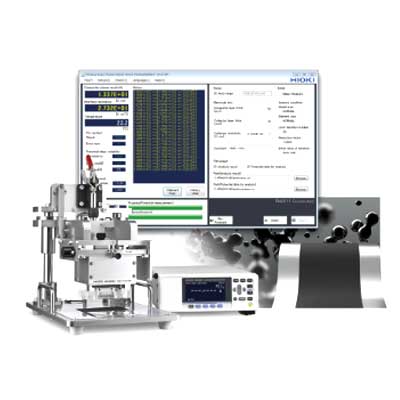
Hioki RM2610 is an advanced electrode resistance measurement system, making the Hioki Rm2610 Electrode Resistance Measurement System Price in Bangladesh a relevant search for battery engineers, researchers, and manufacturers seeking reliable electrode characterization. Designed specifically for rechargeable lithium ion battery electrode sheets, the system helps separate electrode resistance characteristics into composite layer resistance and interface resistance for detailed technical analysis.
The RM2610 is designed to evaluate both positive and negative lithium ion battery electrode sheets. Instead of treating electrode resistance as a single value, the system uses potential measurements and proprietary analytical techniques to distinguish the resistance of the composite layer from the interface between the composite layer and current collector. This approach provides engineers with deeper insight into electrode performance and material behavior.
A key advantage of the RM2610 is its ability to quantify composite resistivity and interface resistance separately. This information can help battery developers investigate how electrode materials, composition, coating conditions, and manufacturing processes influence electrical characteristics. Such detailed resistance analysis supports more informed decisions during electrode development and quality evaluation.
The system uses a dedicated test fixture equipped with an array of test probes to measure the surface potential of an electrode sheet. The probe arrangement enables consistent contact with the test sample while supporting the analytical process used to determine the different resistance components. The test fixture can also be rotated for convenient probe inspection and maintenance, helping simplify routine laboratory operation.
The RM2610 combines an electrode resistance meter, measurement software, press unit, test fixture, and connection accessories as part of its measurement system. The electrode resistance meter performs the potential measurement, while the calculation software processes the measurement data to determine the relevant resistance characteristics. This integrated approach provides a structured workflow for laboratory testing and battery research.
Understanding resistance distribution within an electrode is important when developing and optimizing lithium ion batteries. The RM2610 insulation resistance tester can help researchers evaluate changes associated with electrode materials and composition, identify resistance trends, and investigate the electrical characteristics of electrode sheets. Its specialized measurement approach makes it particularly suitable for battery research, development, process optimization, and material evaluation.
Regular inspection of the probe system is important for maintaining dependable measurement performance. Hioki provides a maintenance procedure that allows continuity and insulation checks without completely removing the test fixture from the system. The accessible probe design helps simplify cleaning and inspection, supporting consistent operation in laboratory environments.
With specialized electrode characterization, separate evaluation of composite and interface resistance, dedicated test hardware, and analytical software, the Hioki RM2610 provides a professional solution for lithium ion battery electrode research. It is well suited to engineers, battery manufacturers, research laboratories, and quality teams that require detailed electrical characterization to support electrode development and manufacturing improvement.
RM2611 Electrode Resistance Meter requires regular calibration. For more information about calibration, please contact your authorized Hioki distributor or reseller.
| Measurement target | Positive and negative electrode sheets for rechargeable lithium-ion batteries | |||||
|---|---|---|---|---|---|---|
| Measurement parameters | Composite resistivity [Ωcm] Interface resistance (contact resistance) between the composite layer and current collector [Ωcm^2] |
|||||
| Computation method | Inverse problem analysis of potential distribution using the finite volume method | |||||
| Information necessary for computation | • Composite layer thickness [μm] (for 1 side) • Current collector thickness [μm] • Current collector volume resistivity [Ωcm] |
|||||
| Measurement time | - Contact check + potential measurement : approx. 30 sec. - Calculation : approx. 35 sec. (on a PC with Intel core i5-7200U CPU) The measurement time may vary depending on the measurement target and the processing capacity of the PC. |
|||||
| Measurement current | 1 μA (min.) to 10 mA (max.) | |||||
| Number of probes | 46 | |||||
| Recommended PC specifications | CPU: 4 or more threads RAM: 8 GB or greater (4 GB required) Operating system: Windows 7 (64-bit), 8 (64-bit), 10 (64-bit) |
|||||
| Temperature measurement function | Measures temperature near the test fixture | |||||
| Included accessories | TEMPERATURE SENSOR Z2001 ×1, USB cable ×1, USB license key ×1, Probe check board ×1, Power cord ×1, Instruction manual ×1 | |||||
| Included accessories | TEMPERATURE SENSOR Z2001 ×1, USB cable ×1, USB license key ×1, Probe check board ×1, Power cord ×1, Instruction manual ×1 | |||||
|---|---|---|---|---|---|---|
No resources available for this product.
No reviews yet. Be the first to review this product!
Related Products
Discover your related products for more professional testing and measurement solutions.